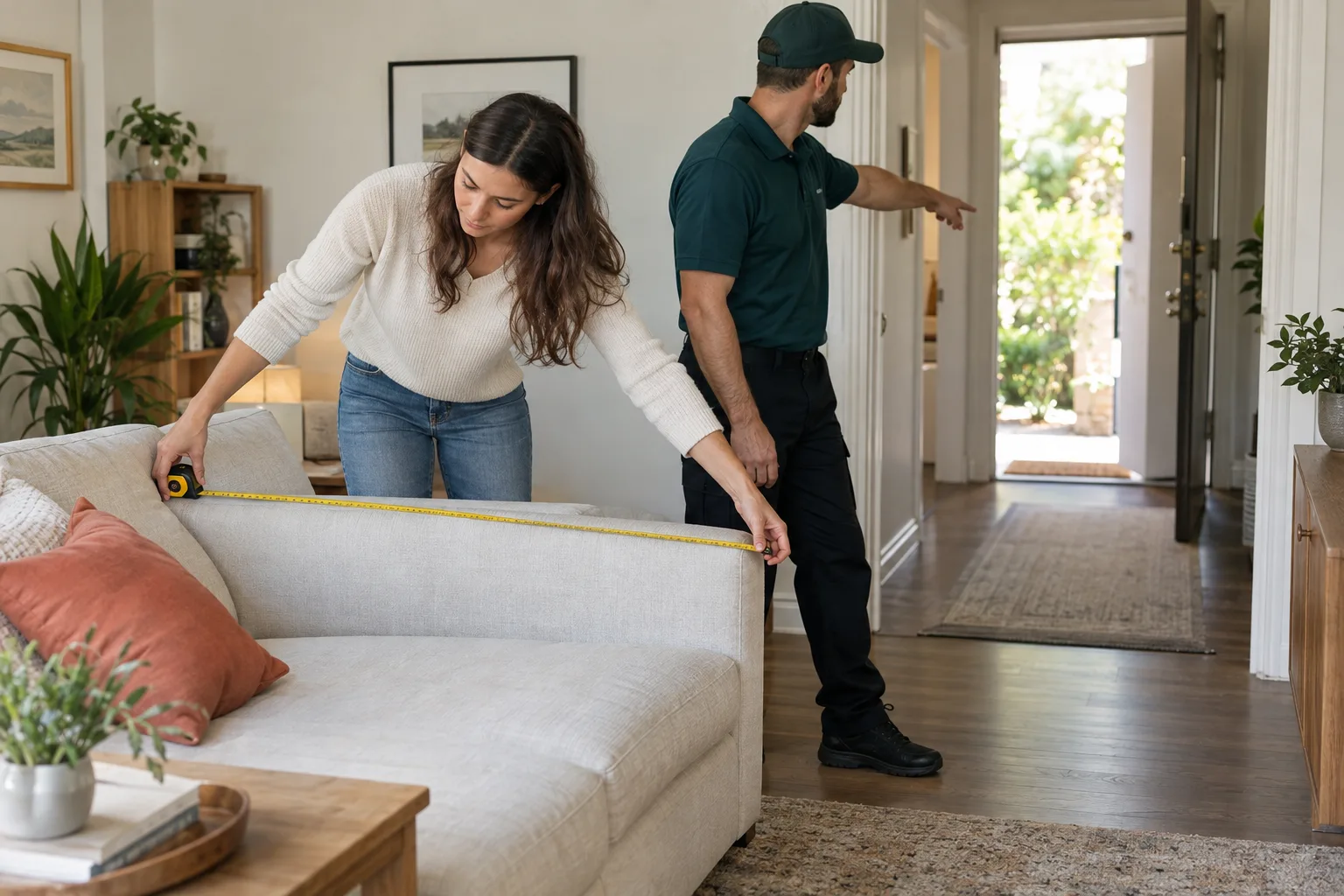
Start with the fixed frame
Measure the couch at its widest fixed points: arm to arm, floor to the highest back, front to back, and the longest useful diagonal across the side profile. Remove loose cushions from the measurement, but do not subtract legs or arms unless the manufacturer designed them to come off and you know they can be removed safely.
Walk the complete route
Measure the clear opening with each door fully open. Then check hallway width, ceiling fixtures, stair landings, rails, elevator doors, gates, and the turn into the loading area. The narrowest point is only part of the problem; a couch also needs room to rotate before and after that point.
Record what changes the plan
Note whether the sofa is a sleeper, recliner, or sectional. Count every modular section and flag connected power cables, metal mechanisms, damaged frames, or loose feet. Take wide photos of the couch and the route rather than close-ups that hide the surrounding clearance.
Use this call checklist
Have the couch dimensions, narrowest opening, floor level, stair count, elevator status, parking distance, and photos ready. Ask whether disassembly is included, what parts should be removed beforehand, and what happens if the route differs from the description.
Know when to stop
Do not force a sofa into a doorway or attempt a stair carry without enough people, stable footing, and a clear plan. A heavy or mechanically complex piece should be assessed before it is moved.
Planning reference: source reviewed October 10, 2026.
Need help with this item?
Review the service scope, then call with dimensions and access details.
View Couch & Sofa Removal